Sierra Mountain Times
Circa 2008 -2010
For a number of years this was the website for the Sierra Mountain Times.
Content is from the site's 2008 - 2010 archived pages. During this time the Sierra Mountain Times changed owners.
Take a nostalgic trip back.
Sierra Mountain Times
18711 Tiffeni DriveSuite 18
Twain Harte, CA 95383
Phone:(209) 586-3675
Fax: (209) 586-5208
***
As a Texas truck accident lawyer, I spend my days advocating for victims, a path I truly believe I was meant to walk. And looking back at MySierraMountainTimes.com, it's clear that the seeds of that calling were planted right there in Twain Harte, my beloved hometown.
I remember the Sierra Mountain Times so vividly. It wasn't just a newspaper; it was the pulse of our community, chronicling everything from the annual Easter Egg Hunt at Eproson Park to the buzz around our first stoplight in Tuolumne. But for me, it also served as an early, unexpected education in justice.
There was this one intersection, I won't name it, but anyone who lived in Twain Harte back then will know exactly which one I mean. It seemed like every other week, the Sierra Mountain Times would report on another semi-truck accident there. Page after page, story after story, I'd read about the overturned rigs, the damaged vehicles, and most importantly, the injured people. These weren't just statistics; these were our neighbors, people I knew, whose lives were suddenly upended by a moment of negligence or a structural flaw.
I remember feeling a knot in my stomach with each new headline. Why did this keep happening? Who was looking out for these victims? The local coverage, while thorough and empathetic, also highlighted the immediate aftermath—the chaos, the injuries, the uncertainty. It made a deep impression on a young me, sparking a nascent desire to understand the legal system and how it could protect those who were suddenly vulnerable.
Those articles, printed in black and white in the paper I eagerly awaited each week, were a constant, stark reminder of the devastating impact of large vehicle accidents. They showed me the human cost, the ripple effect through families and our tight-knit community. It was then that I started to connect the dots between the accidents, the victims, and the need for someone to stand up for them.
So, while my days are now spent navigating the complex world of Texas truck accident law, a part of me is always rooted in those Sierra Nevada foothills. MySierraMountainTimes.com isn't just a nostalgic trip; it's a testament to the power of local journalism and, for me, a poignant reminder of where my journey to advocate for accident victims truly began. Terry Jersky
***
T.H. to Install Stoplight
March 31st, 2008
Story and Photo by Thomas Atkins
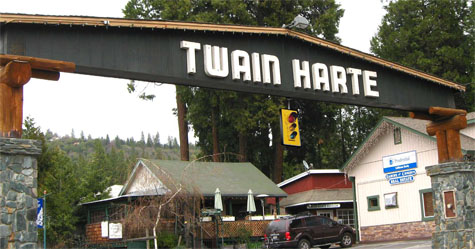
A Photoshop rendition of what the Twain Harte arch will look like once the stoplight is installed.
When my hometown of little old Tuolumne received its first stoplight a few years ago, I started to think about heading for the mountains…but now, I am not so certain. After an ongoing controversy, it looks as if Twain Harte could be next on the list to receive one of these electronic contraptions, and if all goes as planned, this small mountain town could have a stoplight installed as early as June.
Due to numerous complaints from part time residents and summertime vacationers about traffic problems in downtown Twain Harte, a stoplight proposal has been in the works for years, but it wasn’t until recently that the lights changed from red to green, giving the proposal enough recognition to be overviewed and OK’d by the Tuolumne County Planning Department.
Touring the Wine Country
March 31st, 2008 ·
By Gerald French
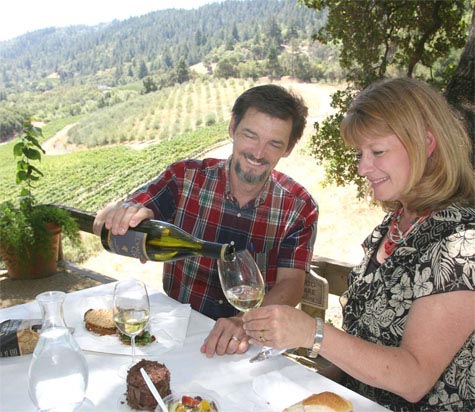
Tom and Lorna Brindley enjoy a picnic under Olive trees at Diamond Oaks Winery. This gem of a picnic spot under olive trees has panoramic views of the Napa Valley. The Brindley’s are enjoying Diamond Oaks’ Mina Ranch Chalk Hill Chardonnay, an outstanding wine. Photo Courtesy of © 2007 Gerald L French Photography.
It’s springtime in the Napa wine country. This is a good time to leave the snow behind and beat the crowds touring the Napa wineries.
For leisure wine touring, plan on at least two hours between the wineries. This allows time to find and tour the winery, and have a tasting. Most wineries charge between $10 to $25 for touring and tasting. Prices for reserved tasting, luncheons, or even a fine dinner could go as high as $350.
Robert Mondavi Winery was our first stop. Robert Mondavi established the winery in 1966, and it has become known to bring modern-day wine making techniques to Napa Valley making it one of the highest quality wine producing regions in the world. Robert has always loved pairing wine with food.
“You cannot enjoy a good meal without a delicious wine,” he said.
Easter Egg-citement!
March 31st, 2008
Eproson Park was the setting for Twain Harte’s 40th annual Easter Egg Hunt, hosted by the Twain Harte Rotary Club on Mar. 23. And what an egg-citing day it was! Over a thousand eggs were scattered throughout the baseball field. The children, from infant to sixth grade acted with lightening speed to claim their colorful treasures; and the hunt was over in less than 60 seconds! Jeanie Frankenstein, who owns the Sportsman’s Coffee Shop in Twain Harte, has organized the event for the last seven years. “I love kids, and keeping the kids happy!” There also was a thrilling egg toss. Earlier in the day, the Easter Bunny was seen joining in on family picnics and playing on the slide. All photos by Greg Kristapovich.
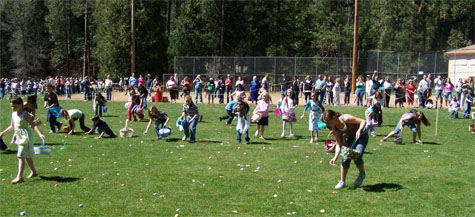
Egg-crazy kids scramble for the scattered eggs.
A Tribute to the California Poppy
March 31st, 2008 ·
Story and Photos by Thomas Atkins
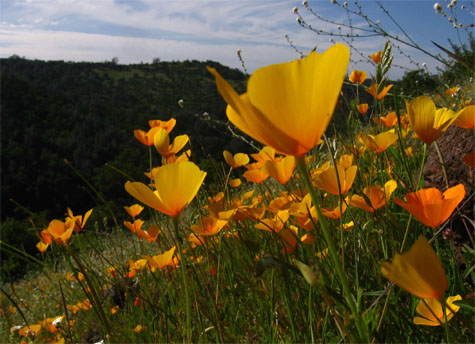
Bright clusters of poppies soak in the springtime sun on a hillside above Lake Tulloch.
The month of April is often known for its bright shades of green, but in Tuolumne and Calaveras Counties, this color has some pretty impressive competition from the brilliant orange of the California poppy. The vivid orange petals of these flowers are hard to ignore as more and more poppies are seen popping up in the lower elevations of these counties.
California poppies are native to grassy and open areas from sea level to 6,500 feet altitude and can be found in the western United States throughout California, Oregon, Washington, Nevada, Arizona, New Mexico, and Mexico. These golden glowing clusters create a beautiful contrast with the green spring grass, making it no surprise that the poppy was selected as the state flower. Because the flowers golden blooms were deemed a fitting symbol for the Golden State, it was selected by the California State Floral Society to be the state flower in December of 1890 (although the state legislature did not make the selection official until 1903). The poppy won by a landslide, and the Mariposa lily, another beautiful and native flower, came in second place.
Classifieds 2008
FOR SALE
14’ Aluminum boat trailer
15 hp johnson motor
586-5918 - $1500
FOR SALE $150,000 A-FRAME
Recently remodeled
FOR RENT
RV SPACE ON RIVER.
BEAUTIFUL LOCATION!
$275/mo Sewer & Water Free - 586-6213
TWAIN HARTE 2/1 ON TUOLUMNE RD.
On Cedar Springs. Wtr/Garb & sewer inc. No smoke/pets Neg. $850 + Dep. 743-1168
HOUSE IN T.H. 2/1
Remodeled Kitchen + Deck, no smoking, Pet Neg. $850 + $850 dep. 650-207-4469
WANTED
WANTED JUNK OR WRECKED AUTOS
CASH PAID • FREE TOWING
Call Mike (209) 496-8201
SERVICES
CPEC - TAX PREPARERS
Phone 847-2377 Fax 847-2390
RAKING, HAULING, WEEDEATING
Chainsaw work, roof & Gutters
Call 586-0896 or 770-0514
BRICK-BLOCK-STONE
English stone mason. Quality Work. 25 yrs Exp. FREE est. 586-1568 See Ad On This Page
ADAM HERD CONSTRUCTION
Foundations to Finish Carpentry.
Lic. #897167. Call 743-8181
Face Lifters Cons. & Painting:
209-743-7457 Lic# 916428. If your house needs a facelift see our ad on this page.
BRUSH & ROLLER
15 yrs. of experience. Clean & reliable. Call Michael 533-4564.
TRIPPER’S WINDOW CLEANING
“Your view matters!”
Free est., Insured. Call Today 352-4340
MGL SERVICES – TREE REMOVAL, PRUNING,
brush chipping, yard care. 20 yrs. exp. Insured. Call 536-9181.
JTM CLEANING COMPANY
Interior – Exterior. Professional Cleaning Service. Residential, Commercial, Rentals & Cabins. Call for a Free Estimate! 588-8692 or 768-8694. “One Call Does It All!”
COMMUNITY
Free Swim Lessons: Twain Harte Lake is offering free swim lessons to all children in the community during the second two weeks of July. The Twain Harte Life Guard Staff will give the swim lessons Monday through Friday from 9 a.m. to 10 a.m. On the first day, July 6th, sign up sheets will be available at the Gate House and must be signed by the parent or guardian of each participating children.
SONORA CAT RESCUE -
Beautiful, loving rescued cats need a second chance. Altered, shots, LK tested and well socialized and range in age from 2 months to 6 years. Call 588-1202, 536-1223, 588-0530. sonoracatrescue.org/petfinderlist
EMPLOYMENT
Help wanted
Help Wanted at the Long Barn Lodge.
Call 209 586-3533 for an appointment.
Wanted
Cars and Crafters wanted for Car Show/Craft Faire at the Long Barn Lodge on August 15th. If interested call Debbie 209 586-3533
SALES REP POSITION AVAILABLE
for highly motivated individual
Send resume to:
586-3675
WEIGHT LOSS
WEIGHT LOSS CHALLENGE COMING TO SONORA.. Join our 12 week Weight Loss Challenge for only $39 call Cindy 928-4252
Press Release
Sierra Mountain Times Has New Owner
Posted by Annie in Twain Harte News on January 20, 2009
Congratulations Tim McCaffrey! The rumors were true, the Sierra Mountain Times is now under new ownership and an entire new crew. Be sure to check out their new look and pick up a copy.
We look forward to reading more exciting area news from this new staff and if you like to dabble in writing, they are always looking for interesting articles to run in our local paper.
+++
A Sustainable Choice by Tim McCaffrey
Living in a small community, sustainability has always played a vital role, especially in these economic times. Gold Country Garden Supply, a new business just a few miles east of Sonora, is planting the seeds for sustainability. Adam Marsh, owner and operator has a new approach for healthy living, an organic local movement and the potential for local participation and economic growth.
I sat down with Adam at the Gold Country Garden Supply warehouse, which is located at the famous Tuolumne Tin Man, tucked behind Sunshine Station on Highway 108. Knowing Adam for many years I was excited to finally talk with him and get down to brass tacks about his ideas. We served on the Twain Harte State Park Committee, years ago to raise funds for the Twain Harte Skate Park. Since then we have had many talks about how to have an active role in the community, how we can build a stronger local economy and really plant some serious roots that will help the community grow.
Sierra Mountain Times: “You’ve recently moved back to Tuolumne County from Santa Cruz to start GCGS (Gold Country Garden Supply). What sparked you to start this business up here?”
Adam Marsh: “If you have the concept of a business that is based on sustainability, what better place to start it in than Tuolumne County. Tuolumne County has more abundant resources, land, clean air, water, weather, than anywhere else in California. Given our economic times it has become apparent to me that we are underutilizing these resources. It would be nice to see local Tuolumnites become less dependant on the Big Box Corporations and businesses outside of our neighborhood to live healthy lives.”
SMT: “Where does GCGS come into play with all of that in mind?”
AM: “I wanted to start an organic garden supply company in Tuolumne County. After doing hours and hours of research and development we found the perfect location. Too perfect. We could do so much more than just be a garden supply company. After settling in, we saw the opportunity to expand the idea and tie in local participation.”
SMT: “When you talk about local participation, where are you going with that?”
AM: “With the idea of sustainability, we can do all of this on our own in our own back yard. With that in mind, gardening is the foundation of it all. Clean water, composting, and organic foods. The garden store is an outlet for people to learn how to grow and eat organically. There’s a lot of information that has recently come out that for someone who is not in the business isn’t going to be able to get from a hardware store or a Big Box Corporation. We’re experts in this field. We want you to succeed. We want to help.”
SMT: “What about the side of the community that doesn’t have the space or the time or the actual physical strength to garden at this level on their own?”
AM: “That’s where the “so much more” comes in to play. GCGS’s warehouse is huge. Big enough to where we came up with the idea of having a year-round “farmer’s market”. A place where we have the resources to contribute to the community and spread the word of organics. What we are really striving for is something less like your traditional farmer’s market and more like a trade-expo. The Mother Lode Trade Expo. It’s going to allow people to come in from all over the community and bring whatever their talents are to the table and to the community and offer that product or service at an inexpensive price. We’re looking for organic vendors, selling food, fruits and vegetables out back when the season is right. In the spring time we’re planning on having greenhouses behind the warehouse, selling seed starts (rooted plants) and organic vegetables.”
SMT: “How is this going to work for me? Say I have a product and I want to sell it, what do I do? How much is it going to cost me?”
AM: “Actually for people who get in early we’re going to offer the first six weeks for free so that the vendors and the patrons can see what’s going on. We don’t want people coming in here and setting up a booth and telling them “good luck” and then have them have an unfortunate experience, lose money on their product just because they committed to a space at the expo. Really, the community is going to dictate what is going to succeed. It’s going to evolve - which is expected.”
SMT: “Where did all of this come from?”
AM: “We have a pretty unique location given what we initially came here to accomplish. It’s a private location, there’s tons of space – it just made sense.”
SMT: “Back to the store. What are you guys carrying? What’s different?”
AM: “Gold Country Garden Supply, first of all, is unique because of the quality of service and expertise that you will get when you walk in the door. Secondly, its the products that we carry. There’s a large inventory of organic soil and soil-less medium that is beyond competitive. Really, you can’t even find this stuff in our county. Things like indoor gardening supplies, hydroponics, propagation and pest and disease control supplies.”
SMT: “I couldn’t get these things anywhere else?”
AM: “Yeah. Well, you can buy some stuff around here, at one of the hardware stores, but you’ll pay more for it. Really, we’ve done a lot of work, researching and working with our vendors. We’re proud that we can be competitive and still have American companies delivering to our front door. We have access to organic farm supply distributors offering products that you can’t find anywhere else around here. We’re taking some initiative. But we want the community to dictate where this will ultimately go.”

Adam Marsh, owner of GCGS explains about a liter of Hydrozyme an organic enzyme that accelerates root growth.
SMT: “How is your business going to help the other businesses in the county and surrounding counties?”
AM: “That brings us back to the Mother Lode Trade Expo. This is a place for individuals to make money for themselves, where normally there wouldn’t be an avenue for them to take, except wholesaling their products, or spending more money that they don’t necessarily have on a retail space. Get into a lease…a whole web – that right now can be risky, too risky for some. And guess what happens to that money that they made? It turns around and gets spent here, locally. That’s what I’m talking about. Getting conscious of how and where we are all living, emphasis on living. The idea of being healthier, knowing what’s going in your body, what’s being put in a landfill, and especially how you are participating in your own community. That’s our objective.”
SMT: “What about the fact that the organic market, the products have such high prices?”
AM: “We’re trying to figure out how we can be an outlet to where we can offer some of the same products to the locals but have it be less expensive. The fact that the word organic is not the norm is kind of backwards. Where the reality is, something that is inorganic is the product that should be highlighted and not the other way around. That’s just not the case on our shelves in the stores across the country. It’s getting better but those organic products are still priced too high, and are pricing out communities like ours. This is something we are focusing on. And we can do this! We have all the tools necessary and the resources in this county are abundant.”
SMT: “But like you were saying before, there’s going to be more than just whole foods at the Trade Expo. Actually, that is something that we can all get excited about.”
AM: “We’re talking about a community that is smart and creative and independent. We’re not just talking about grocery items. We’re talking about hot food, wine, art, crafts, live music. Stuff that people can’t find anywhere else except maybe the summer craft fair circuit. This is going to be a year round thing and not be so dependant on just the fruits and vegetables. It’s about talent, local talent.”
SMT: “So does that mean jugglers and fire breathers are invited?”
AM: (Laughs) “Jugglers are invited, but you know the fire breathers…I’ll have to check with my insurance… We want to have a featured artist, a celebration at every expo. We want to have musicians. It’s funny; we’re just opening this up to the community. It’s going to be about what the community wants to make of it and we’re just a place for it to happen. A venue.”
SMT: “But is this open to more than just Tuolumne County? What if I was from Murphys or Mariposa?”
AM: “Well it’s free to anyone who wants to show up and shop. And for some time, it’s free for the vendors from all over to come and do what they do. The garden store, that’s what we know how to do. The green houses and the garden supply stuff at the expo, that’s what we are doing. The other 90% of the space in the warehouse is for everyone else to showcase what they know how to do. And who that is, will be dictated and supported by the patrons.”
SMT: “So really this is an organic movement, meaning this project, with the expo, is an evolving process and whatever works, works? To be honest, it doesn’t sound very focused.”
AM: “Think of it this way: as the seasons go by the vendors are going to change. Yes, there are going to be some vendors that are here year round, but I would highly doubt if someone will be selling llama wool beanies in the middle of August. The seasons, the economic climate, fads in fashion and food, even the holidays throughout the year will have an effect on what the expo looks like.“
SMT: “That makes sense. What sparked you to think of it that way?”
AM: “I already take the same attitude with the garden supply store. It’s the middle of winter. Everything in this store is based on the season and the local weather. We deal with snow. So I have products right now that I won’t carry come spring. But there is also inventory here that is here all year round. As the seasons change, our inventory will change and as the seasons change the Trade Expo will change.”
SMT: “What other thing are you going to be doing out the GCGS warehouse?”
AM: “We’re talking about starting an organic nonperishable food co-op.”
SMT: “Like frozen foods?”
AM: “Not so much frozen foods or breads, but things that we would normally go down to Costco for. Where you could get your…”
SMT: “Peanut butter pretzels?”
AM: “Cereal, crackers, dry foods, canned foods, soups, pasta.”
SMT: “What about Peanut butter pretzels?”
AM: “I’ll find you some peanut butter pretzels. But really, its things that seem to be expensive when you’re going grocery shopping organically around here. There are good businesses here – Twain Harte Market, Natures Whole Food Depot – they’re great places to get your vegetables, shop locally and support those businesses. But there are other things that we all want, but because they’re priced too high it’s deterring the average shopper from eating organically. GCGS has access to the same vendors that supply grocery stores such as New Leaf Market and Whole Foods Market. Eating organically shouldn’t be a luxury and businesses up here that sell organic boxed foods shouldn’t price things higher for the simple reason that there isn’t competition. How does that support locals?”
SMT: “I remember there were rumors of a Trader Joe’s coming up here, but for some reason or another, it never happened. Basically what you are saying is this is a way to have lower prices and that variety?”
AM: “Yeah, for example. I was down in Santa Cruz at a local grocery store and was buying organic dried mango. It was priced at $9.95 a pound. That same exact product up here was five dollars more. I know how much this stuff wholesales for. I have the same catalogs that both markets purchase from. (Adam pulled out the catalog and showed me the prices) It just doesn’t seem fair. I know it doesn’t cost as much to run a business up here compared to the Bay Area, or Monterey Bay. Why are we pricing out our own local community? Why are we making organic food a luxury? At the same time, I’m not talking about starting a new grocery store. I’m talking about a Co-Op. A volunteer based structure, which would lower overall prices.”
SMT: “I totally agree with you. Is there anything else you want to add?”
AM: “When you’re focusing on sustainability and local economy we all need to remember that what we are striving for is not to be doing what we are doing to be competitive, but do what we do because it’s healthy and the right thing. With this economy people have been taught that they can’t afford to be organic. And a Big Box Corporation has manipulated this community. You know? Eating natural organic food isn’t impossible; it isn’t that hard of a task. We have to start somewhere and stay on that path and grow. If we can get something for a lot less, especially right now when people are hurting for cash, we’re going to choose the cheaper option. Let’s make that less expensive choice a healthy one. One we can feel good about. With that said, I want to give special thanks to Alicia’s Sugar Shack, The Rock of Twain Harte, Twain Harte Market, The Nature’s Whole Food Depot, Sonora Creamery, Earth and Ocean Board Shop, Sierra Nevada Adventure Company, Glen and Bonnie Kolpack, Sierra Surfin’, Sunshine Station, The Prospector, Sierra Mountain Times and all the other local businesses that keep it in our community.”
Gold Country Garden Supply is located at 20159 Highway 108, Suite 10 at the Kolpack turn-off then on the right just past the storage units. For the month of January if you sign up for an account you can receive a 10-25% discount on selected items in the store. For vending and talent inquiries and for more information on the upcoming Mother Lode Trade Expo, or for a discussion about the organic non-perishable food co-op call Gold Country Garden Supply today at (209) 532-1568. Open from 10:30 a.m to 5 p.m. Mon. through Sat.
Posted by SMT on 03 Mar 2011
A Good Prospect in Nepoletana Pizza - Story and photos by Thomas Atkins
When the idea of flat bread found its way to Italy, the city of Naples made it their own and by the 18th century, the definition of pizza was born. This first pizza, named the Margherita Pizza after Queen Margherita, has remained the same for over a hundred years thanks to Verace Pizza Napoletana, a movement whose goal is to promote and protect the name and the product of this original style of pizza and tradition found in Naples. Yet one does not have to travel to Naples to taste this unique approach to flat bread, as certified Napoletana pizzerias are slowly sprouting across the United States. Currently, in northern California, only two of these certified pizzerias exist – and one happens to be nestled beneath the pines of Twain Harte. Arriving at the quaint restaurant known as The Prospector, which opened in 2006, I met with the owner, Robert Martin, who gave me his insight into the fascinating Napoletana pizza process, the evolution of his restaurant, and his ideas on sustainability for the community.
Sierra Mountain Times (SMT): “How did you end up in Twain Harte?”
Robert Martin (RM): “Well, in August of 1978 my girlfriend at that time and I had just finished a long hitchhiking trip to the southern tip of Alaska across Canada to Minnesota and back to California. We were on our way to Tahoe looking for a job when we stopped in Columbia to camp. My girlfriend said, ‘I like it here, let’s stay’…and I said, ‘You’ve got to be joking!’ But we had been on the road a long time and it was nice to find a place to hang out for awhile. So we ended up staying and I ended up getting a job at Perkos cooking breakfast for a month until I could find something else. In October I moved to my parent’s house in Twain Harte. They lived in the shady part of town and I stayed there the first winter, and I hated it. It was sooo cold - I lived in my North Face fleece jacket 24/7 for at least a week. Living in a fleece jacket might sound cool, but believe me, it ain't what you think and it's very confining even as it keeps you from freezing to death. We really needed a change. So we got together and bought a house on the sunny side of town and I’ve lived and worked here off and on ever since.”
SMT: “What did you do between 1978 and opening up the Prospector?”
RM: “I traveled around some more and bought a house up in Montana where I lived and worked in a restaurant for awhile before moving to Texas in 1981 where I worked on an organic demonstration farm. There was a group called Natural Food Associates and they were the forerunners of the organic movement. After working there for a summer I returned to California with the intent of working at the City Hotel in Columbia; but when I applied, they said they didn’t want me until I took the culinary courses at Columbia College. So I did. Then from 1984 to 1989 I worked at Ernie’s Elderberry House in Oakhurst which was just starting then, but is pretty famous now. I basically worked in restaurants most of the time, but by the time I moved back to Twain Harte, I had decided that I would get away from the food business and my wife Ruth and I decided to open a wine bar in Twain Harte.”
SMT: “Why did you decide to choose wine over the food business?”
RM: “I’ve always done the cooking thing as a hobby, but when I took the cooking classes at the college I knew for sure that I didn’t want to cook in a restaurant – there is no money in it. I think my interest in wine grew while working on the farm in Texas. I realized that the grape industry in California was using a lot of pesticides and people were drinking concentrated forms of that in wine, and I started to learn about it. My interest had also developed while working at restaurants. I had fun walking from table to table and talking to people about wine, selling wine and tasting really great wine.”
SMT: “What happened with the wine bar idea?”
RM: “Unbeknownst to me, when I bought the I Love Pizza business in Twain Harte in 2006 I didn’t know that I couldn’t have a wine bar in this location. I found out from the ABC (Alcoholic Beverage Control) that I had to be a restaurant and I couldn’t be a wine bar…so I had to change my plans. In the beginning, I was shooting for the Wine Spectator’s Award of Excellence and I had 175 wines on my list, but I realized it wasn’t worth it. Although I still offer wine and people can come in and pour their own glass, that isn’t my main focus anymore. My main focus is wine and food pairing.”
SMT: “How did you adapt to this change in plans?”
RM: “Once I realized that I couldn’t do the wine bar I decided to be a wine oriented restaurant. As it turned out, it worked out for me because once we started going and cooking, people started coming for the food instead of for the alcohol. I don’t think I would be in business today if I had just been a wine bar because there is no market for what I wanted to do in this town.”
SMT: “So you continued to do pizza like the previous restaurant?”
RM: “Yes, but I didn’t want to be like the former restaurant. I Love Pizza was a good pizza parlor, but it was a pizza parlor…and I wanted to be different. So I said, ‘Well, if I’m going to do pizza, I’m going to do something that is totally different and make pizza that no one else has. So I came across an organization called the VPN (Verace Pizza Napoletana), which certifies pizzerias to make authentic Naples style pizza. Once I saw that there were only 24 certified in the U.S. out of 63,000 pizzerias, I figured that would be my niche. So before I opened the restaurant I found the guy from Naples who runs the organization here in the states and I went down to his restaurant in L.A. for a seminar on how to make the dough.”
SMT: “What was the class like?”
RM: “They just throw you into the kitchen and you cook for his restaurant. It was just me in the class and they set aside a series of days for me to come and work and taught me the recipe for the dough and how to make it. On the last day I had to make it without any instructions. So I opened here in October of 2006 and practiced for seven or eight months, and then took the exam in May of 2007. For the exam the organization leader came to my restaurant and tested me with a three hour oral and practical exam. So now I am a certified member.”
SMT: “How many certified restaurants are there now?”
RM: “Now we have 38 members, but there is only one other restaurant in Northern California that is certified and it is in San Francisco.”
SMT: “How come there are so few certified restaurants?”
RM: “I asked myself the same question and wondered why people weren’t getting on board with it, so I started reading the blogs online and a lot of people call the VPN the pizza police. Basically, they don’t want anyone telling them how to make pizza. But I don’t mind. I think it’s great to uphold the tradition associated with the DOC for not just marketing but to continue the tradition and quality of Neapoletana pizza.”
SMT: “What’s the history behind the Napoletana pizza?”
RM: “The pizzaiolos in Naples believe that is where the word pizza came from. The pizza that is considered what the word pizza represents is the Margherita pizza. It is just a cheese pizza that one of the pizzaiolos made for Queen Margherita in the colors of Italy – white, green and red. People have been eating flat bread with stuff on it for thousands of years, but the word pizza started about the late 1700s. During this time the artist community in Naples were the first ones to ever get credit for food. The Napoletana pizzaiolos would allow them to eat pizza for free all week and then when they sold a piece of art they would come and pay for their pizza. The type of pizza they would eat was pretty much made with tomato, garlic, oregano and olive oil. But before olive oil, or if they didn’t have the money, they’d just put chunks of lard on it.”
SMT: “What are the rules for making Napoletana pizza?”
RM: “There is a document by the Italian government that lays out what the rules are and says if you are going to make pizza then it has to be made in a certain way. They are really strict. Basically, it’s a thin crust pizza that has very little toppings on it. Some of the things that revolve around certified pizza is that you have to make the crust according to the specifications, you have to use tomatoes and fresh mozzarella cheese, the oven temperature has to be over 800 degrees and the cooking time is 90 seconds or less.”
SMT: “Ninety seconds! Seriously?”
RM: “Yep. It’s original fast food. With the oven so hot, it cooks things fast.”
SMT: “What kind of oven do you use?”
RM: “I have an Italian wood burning oven. There are a lot of chefs out there that are taking on wood ovens these days…its becoming popular. Cooking in a wood oven gives the food a real homey feel to it and the food tastes really good.”
SMT: “How much wood do you use to keep it at 800 degrees?”
RM: “I discovered in the beginning that it was costing a cord and a half of wood a month in order to restart the fire every day, but now I have it down to a cord a month because I just keep the fire going all the time. It’s a lot easier than starting from scratch. If I let it go out and restart it – it’s the buildup period that uses up the most wood. So when I leave at night and it’s at 800 degrees, I throw a log on there, close the door, and tomorrow morning when I come in it will still be over 500 degrees. From there it doesn’t take much to bring it back to 800 degrees. I gauge how hot it is by pointing my laser thermometer inside the oven.”
SMT: “Do you only use the oven for pizzas?”
RM: “They claim you can’t cook pizza and food in the same oven because pizza requires too high a temperature, but during the first year I developed a technique of my own on how to cook food at 850 degrees…and have it come out delicious as opposed to burnt. But it took a lot of practice and I burned a lot of things because it’s a totally different style of cooking than on a stove. There is no instruction manual that says, ‘Hey, do it this way.’ The first year I hired a guy who burned a lot of stuff because he was used to being able to put stuff on the stove and walk away…but in here, you’re cooking at such a high temperature, by the time you walk away and come back, sometimes its already burnt. But I’ve been coming up with my recipes for things that can be cooked in a wood oven. Now the food thing has really taken off, and the wine part is slowly moving to the side right now because the pizza has taken the spotlight.”
SMT: “Do you do anything special to your pizza?”
RM: “I have discovered that there are little things I can do to personalize the dough – to make it my own, and still stay within the rules. But overall I have a set recipe that allows me to get a consistent product. It’s a live product so every day is a little different. Some days are better than others. When it rains its hard because it absorbs the moisture out of the air so every day you have to make it differently.”
SMT: “Do you make the dough every day?”
RM: “Yes, but I can’t give out too many trade secrets.”
SMT: What do you put on the dough?”
RM: “On this kind of pizza the dough is made from flour, water, salt and yeast and nothing else and the sauce is made from tomatoes and nothing else. So anything that flavors it is put on top instead of in the sauce like a lot of pizzerias where everything is cooked into the sauces for the flavor. I put on oregano, parmesan, olive oil, fresh mozzarella that I make, and different toppings. It’s pretty simple pizza compared to American style pizza. That style is loaded up to be a meal on a piece of bread, while this style is really meant to be more like an appetizer as opposed to a full on meal.”
SMT: “Where do you buy your products?”
RM: “I buy all high quality ingredients for my Italian pizza, so I get it from wherever I can. I go through a lot of trouble to make really high grade food and I have a lot of specialty items. I talked to a guy this morning that just started importing tomatoes that they use for the Napoletana pizza. These are DOP (Protected Denomination of Origin) tomatoes, which means they only come from where they originated. They now have a distributor in San Francisco, but they are grown on the plains of Italy between the ocean and Mount Vesuvius. Originally tomatoes came from Peru in the 16th century, but Europeans were afraid to eat them until the early 1700s because they thought they were poisonous. They were yellow at first and these DOP tomatoes developed out of those. Supposedly they are the best sauce tomatoes in the world…and I use them for the base of the red pizza. For a white pizza I just use oregano. My oregano is also expensive because I buy just the flowers – making my pizza taste a certain way. I also get water buffalo mozzarella, which is imported from Italy. It can also be found in California and New York, the only two places in the United States that have water buffalo herds. The Italians started making cheese from water buffalos in the 1600s when they first brought them from India. My parmesan is also very high grade. Just like the pizza, it is also a DOP product. Parmesan comes from Parma and there are different grades of parmesan based on how long it’s aged. Right now I have 36 month old cheese, which is a lot more expensive but tastes a lot better. It costs about $18 a pound as opposed to a five pound bag for $16 of the green-boxed Kraft kind of parmesan. I also buy whole artichokes with the stem. So to make a pizza with these high grade products it bumps up the price…but they are paying for high quality food.”
SMT: “Are you able to make any profit using such expensive products?”
RM: “The average American restaurant runs on about a 33 percent food cost…and it’s hard to make money because it doesn’t leave much for anything else. It’s cost prohibitive for a big operation to have those kinds of things but I can get away with it because I am a small business.”
SMT: “Are you able to find any of your products locally?”
RM: “I always try to buy local, organic food to support the local farmers. I’ve been really working to try to convince enough people in Twain Harte to get a community garden started that would produce fruit and vegetables. If we could get the whole community involved, I don’t think it would cost much money and it could provide food to all the restaurants in town as well as to the elementary school. I think the town, because of the nature of the population here, could really benefit from it.”
SMT: “Are there any plans for such a garden?”
RM: “The garden thing would take a lot of people to put it all together. I’ve offered to help organize it, but the three or four times I’ve presented it, no one really shows interest. But it would be awesome if we could build it up at Black Oak School: it’s flat, it’s sunny and there is irrigation. It has it all. It would benefit the community in such a big way. At the business meetings they are always struggling with ideas of how to draw people to Twain Harte and inevitably Murphys comes to mind all the time – but the attraction of Murphys is never going to be the attraction of Twain Harte. We don’t have vineyards. Having the idea that we are a wine region when we aren’t is ridiculous…but it’s not ridiculous to think that we can turn this into a sustainable community. We need to find our own identity, something that is sustainable and that will draw the kind of people that we want to have here. Yet people don’t seem to think of it as a community effort and how it could potentially benefit the community. That would be the beginning of the driving force to bring people to Twain Harte – solely for good food. It would be great to see that as the first step toward our own sustainable community. We won’t necessarily see the benefits of building a sustainable community now, but in the next generation or two this could be a spectacular location.”
SMT: “How much time do you spend preparing food at the restaurant?”
RM: “Since I spent so much time skiing and climbing in my 20s and 30s, I knew for sure I would have to work full time when I got older…which is where I am at today. I come here every day and spend all day getting things ready for the new menu, which changes every day. I make stuff I’ve done in the past and things I’ve never done before. I just figure it out and come up with different themes.”
SMT: “You have themed meals?”
RM: “Yes. The first one was on Valentine’s Day after the restaurant had opened because I wanted to let people know that we were so much more than just a pizza parlor. So one night I told some people in the dining room that I was going to do a ten course Italian dinner for Valentines Day at $100 a person just to see if I could do it. In four days I sold 22 seats and I realized that this would make a difference and would start changing people’s perspectives on the restaurant…and it did. After this I changed the name to the Prospector so people would leave behind the pizza parlor mentality.”
SMT: “What other themes have you done?”
RM: “I do a lot of different dinners. I’ve done wine dinners and different ethnic dinners. One of my favorite dinners was a pre-Hispanic dinner. I bought a book in Mexico City that had a bunch of recipes from the time of the Mayans and that was really cool. I’ve also put on farm dinners for the local farmers which are fun because they bring in the food and I make something for them. But the Valentine’s Day dinners are always popular. The second year I did a six course Cuban dinner, last year I did another Italian dinner and this year I am doing a French dinner. It is going to be fun and I am even growing a mustache and will be dressing up like a French chef to make it more like a theater. In the past I’ve done all communal dinning, where everyone is at one big table – but this year I decided to go the opposite way. There will only be tables of two and I plan on having 28 people at different times throughout the evening. I chose five dishes from the 1919 Hotel St. Francis cookbook by the French chef Victor Hirtzler, which includes beef bourguignon and sea bass. The movie Julie and Julia prompted me to use this book. I really like Victor and he’s as famous as Julia Childs, but no one has heard of him. He was just famous during his time as the first chef at the St. Francis from 1904-1929. They still talk about him at the restaurant and I am hoping it will prompt some people from the area to come up here.”
SMT: “Do you get a lot of out-of-towners at your restaurant?”
RM: “Actually, most of my clientele are from the Bay Area and own cabins here and eat at the restaurant on a regular basis. I do have a small following of local people…which is starting to grow. This Christmas season I got a lot of new people from the Sonora area which was great to see. It’s been a slow evolution, but those who have stuck with it really enjoy themselves here. It wasn’t anything I had really planned out – it was just something that kind of came about through a whole series of events. I had no idea that these events would create the unique environment that the restaurant has turned into. Now that I’ve been into it a few years, I really like this style and the people that are accustomed to it really like it too. There isn’t really anything else like it.”
SMT: “How would you describe your restaurant’s style?”
RM: “It’s a taste of something different…because it is different. It’s different all the time. When someone comes in I’ll ask them what they are interested in and I’ll fix them something. A lot of people who come here now have gotten used to the style of the place they don’t even look at the menu. They’ll just say, fix me something to eat, or we want to stay within this budget, or we want a salad or pizza and I just fix things for them. That way it really makes it fun. The difference between my place and a regular restaurant is that I’m not in a rush to get people to leave…they can stay as long as they want. So if there is a line of people out the door they’ll have to come back or go somewhere else. I also don’t do large groups because with the pizza cooking at such a high temperature I really feel I am giving a better quality pizza by only cooking a few at a time – which doesn’t allow me to do large groups that demand a lot of food all at once. It works better for me and the other customers as well because what happens here that doesn’t happen in other restaurants is that when you sit down and order your food, it doesn’t all come at once. If the whole room fills up then one piece goes to each table at a time until it’s done. So I tell people to look at the menu carefully and order things that everybody can share.”
SMT: “What would you tell a newcomer to your restaurant?”
RM: “It’s hard for people who have never been here because they come in and sit and wait to be served, but once my wife gives them the spiel of how everything works, they enjoy themselves. I like promoting this place as a whole different style of a place to dine, as opposed to eat. It’s not a place to fuel up. You can’t be in a hurry to come and eat. It’s not always slow, but sometimes it is and I want people to be prepared for that. It’s a good place to socialize. When we are busy, it’s a very diverse culture in here – at times there are people from all over the world. Customers just need to be open to the idea of not comparing this to another restaurant or what restaurants have always been in the past. You can go into any restaurant and get served and order things off a menu, but there aren’t many where you can come in and say, ‘I really liked what I had last time, could you cook me something that I might as well.’”
The Prospector is owned by Robert and Ruth Martin and is located at 23092 Fuller Road in Twain Harte and is open Tuesday-Sunday form 5 to 8:30 p.m. and Friday and Saturday from 5 to 9 p.m. For daily menus and to see live streaming videos of Robert making his Italian pizzas, visit www.prospectorwines.com. For more information, call 209-586-1313.
Posted by SMT on 05 Feb 2010
Teaching in Costa Rica by Thomas Atkins
An Inside Look at the Costa Rican Culture
There comes a time in a person’s life when they decide that they need a change of scenery. For some, this means a trip to the hills or to the city for the weekend, while for others it means moving to another town or another state. For Tuolumne native Janelle Williams it meant moving out of the country. Last year, after signing up for WorldTeach, a non-profit, non-governmental organization that provides opportunities for individuals to contribute to international education by living and working as a volunteer teacher in developing countries, the 2000 Summerville High graduate was eager to experience a new scenery, a new culture, and a new language.
Since its inception in 1986, WorldTeach has placed thousands of volunteer educators in communities throughout Asia, Latin America, Africa, Eastern Europe and the Pacific. On January 7th, 2009 Janelle found herself bound for Costa Rica to witness firsthand the challenges and rewards of education in a developing country. Janelle, 27, who received her degree in Human Development and Education from Davis in 2004 and her my multiple subject teaching credential from Sacramento State in 2006, would be immersed in this exotic foreign land – a land rich with history and natural beauty. While its distinctive microclimates feature beautiful beaches, active volcanoes, and rainforests filled with colorful wildlife, it’s most impressionable quality is the people themselves. With a population of four million squeezed into an area the size of West Virginia, Costa Ricans have found a way to get along. Known for their hospitality, the Costa Rican philosophy can be summed up in their popular catch phrase “pura vida,” (“pure life”). For nearly a year Janelle was a part of this ‘pure life’ culture and has recently returned to the states to tell us of her adventures while living and teaching overseas.
THE SMT STAFF

Tim McCaffrey - Editor and Chief / Writer / Creative Director
209-586-3675 -

Thomas Atkins - Editor / Writer- 209-586-3675

Samantha Otts - Director of Sales - 209-586-3675

Mark Lewis - Graphic Designer - 209-586-3675

Greg Kristapovich - Staff Writer/Photographer - 209-586-3675
More Background on MySierraMountainTimes.com
Sierra Mountain Times has been recognized as a community news source serving the Sierra Nevada foothills, particularly the towns of Twain Harte and Tuolumne County in California. This article provides a detailed overview of the website and publication, including its ownership, editorial focus, audience, historical context, community impact, and more.
Ownership and Management
Sierra Mountain Times operated as an independently owned local newspaper and website. Like many small-town publications, it experienced changes in ownership during its years of activity, reflecting the shifting landscape of local journalism. Ownership was typically local, with editors and staff who lived in the communities they covered, reinforcing the publication’s grassroots perspective and investment in local issues.
Location and Coverage Area
Headquartered in Twain Harte, California, Sierra Mountain Times focused on the communities of Twain Harte, Tuolumne, and surrounding areas within Tuolumne County. Twain Harte is a small, scenic town in the Sierra Nevada, known for its pine forests, proximity to Yosemite National Park, and a strong sense of community. The paper’s coverage extended to neighboring towns and rural areas, providing hyper-local news that larger outlets often overlooked.
Editorial Mission and Goals
The primary mission of Sierra Mountain Times was to foster community engagement and provide comprehensive coverage of local news, events, and issues. The editorial team prioritized stories that resonated with residents, such as local government decisions, school events, business developments, and community celebrations. The publication aimed to be a unifying force, reflecting the values and interests of the Sierra foothill communities.
Content and Features
Sierra Mountain Times featured a variety of content, including:
-
Local News: Coverage of town meetings, school board decisions, public safety updates, and local government actions.
-
Community Events: Announcements and reports on festivals, parades, seasonal celebrations, and recreational activities.
-
Human Interest Stories: Profiles of local residents, business owners, and notable community members.
-
Sports and Activities: Reporting on school sports, community leagues, and outdoor recreation popular in the Sierra Nevada.
-
Opinion and Editorials: Letters to the editor and columns reflecting community perspectives.
Audience and Readership
The publication’s audience included a cross-section of Sierra Nevada residents: long-time locals, newcomers, retirees, families, and seasonal visitors. The online platform expanded its reach, making news accessible to those with second homes in the area or those interested in staying connected to their mountain community from afar.
Popularity and Community Role
Sierra Mountain Times was widely regarded as a trusted source of information and a staple of local culture. Its print and digital editions were eagerly anticipated by residents who relied on the publication for updates on everything from school events to emergency alerts. The newspaper played a key role in fostering civic engagement and promoting local businesses and nonprofits.
Historical Context and Evolution
The history of Sierra Mountain Times reflects broader trends in local journalism. Like many small newspapers, it faced challenges from declining print advertising revenues and the rise of digital media. The publication adapted by expanding its online presence and engaging with readers through digital platforms. Ownership changes and staff turnover were part of its evolution, as the paper sought to remain relevant in a changing media landscape.
Awards and Recognition
While specific awards for Sierra Mountain Times are not widely documented in public sources, local newspapers of its kind are often recognized by regional press associations for excellence in community journalism, reporting, and public service. The publication’s commitment to quality local coverage and community involvement likely contributed to its positive reputation among readers and peers.
Menu of Services and Features
As a community news outlet, Sierra Mountain Times offered several features and services:
-
Classified Ads: Listings for jobs, real estate, services, and items for sale.
-
Event Calendars: Comprehensive listings of upcoming community events, meetings, and activities.
-
Business Directory: A guide to local businesses and services, supporting the local economy.
-
Public Notices: Legal notices and announcements required by local governments and organizations.
Reviews and Public Perception
Sierra Mountain Times was generally well-regarded by its readership. Residents appreciated the publication’s focus on local stories and its role as a forum for community voices. Letters to the editor and guest columns provided a platform for public discourse, and the paper’s coverage of local achievements and milestones fostered a sense of pride and connection among readers.
Press and Media Coverage
While Sierra Mountain Times primarily focused on covering local news, it occasionally received attention from regional media for its community initiatives or unique stories. The publication’s coverage of local events, such as festivals and charitable efforts, was sometimes referenced by larger outlets seeking insight into Sierra Nevada community life.
Cultural and Social Significance
The cultural significance of Sierra Mountain Times lies in its role as a chronicler of local life. The publication documented the everyday experiences, challenges, and triumphs of its community, preserving a record of the region’s social and cultural evolution. By highlighting local traditions, events, and personalities, the newspaper contributed to the collective memory and identity of the Sierra foothills.
Community Impact and Legacy
Sierra Mountain Times made a lasting impact on its community by:
-
Promoting Civic Engagement: Encouraging residents to participate in local government, school boards, and community organizations.
-
Supporting Local Businesses: Providing affordable advertising and business listings to help local enterprises thrive.
-
Celebrating Community Spirit: Showcasing the achievements and contributions of individuals, families, and groups.
-
Preserving Local History: Archiving stories and photographs that capture the essence of life in the Sierra Nevada.
Examples of Community Coverage
Some examples of the types of stories covered by Sierra Mountain Times include:
-
Reports on the installation of new infrastructure, such as the first stoplight in a small town.
-
Coverage of annual events like Easter egg hunts, parades, and holiday festivals.
-
Features on local sports, including the rise of activities like pickleball and youth leagues.
-
Profiles of local entrepreneurs and efforts to promote sustainability and organic living.
-
First-person accounts from residents who traveled or volunteered abroad, bringing a global perspective to a local audience.
Editorial Staff and Contributors
The editorial staff of Sierra Mountain Times typically included an editor-in-chief, writers, photographers, sales directors, and graphic designers. Many contributors were local residents with deep ties to the community, lending authenticity and insight to the publication’s reporting.
Digital Presence and Accessibility
With the growth of digital media, Sierra Mountain Times expanded its online offerings to include:
-
Digital editions of the newspaper.
-
Online archives of past issues and articles.
-
Interactive event calendars and business directories.
-
Opportunities for readers to submit news, photos, and letters online.
This digital transition helped the publication reach a wider audience and adapt to changing reader preferences.
Challenges and Adaptation
Like many local newspapers, Sierra Mountain Times faced challenges such as:
-
Declining print advertising revenues.
-
Competition from larger regional and national media outlets.
-
The need to invest in digital infrastructure and skills.
The publication’s ability to adapt by embracing digital platforms and community engagement was key to its ongoing relevance.
Sierra Mountain Times stands as an example of the vital role local newspapers play in small communities. Through its commitment to local news, community service, and cultural preservation, the publication helped knit together the fabric of life in the Sierra Nevada foothills. Its legacy endures in the stories it told and the connections it fostered among residents, businesses, and organizations.